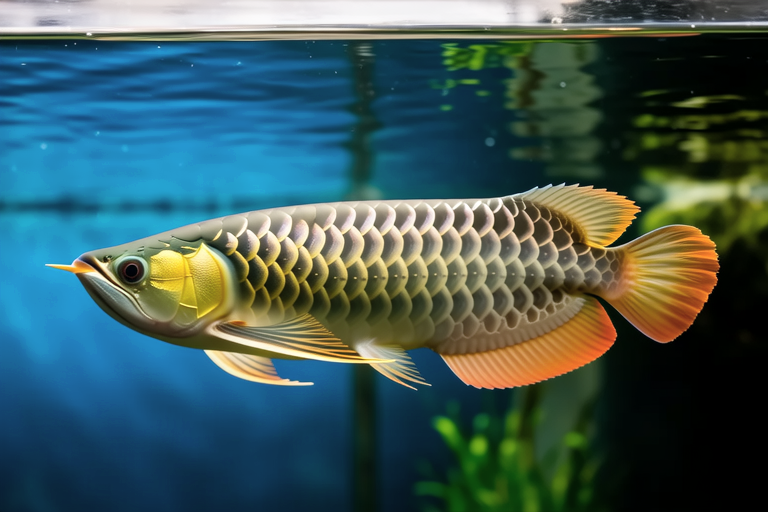
From Ancient Waters to Modern Tanks: The Fascinating Life of Arowanas
Ancient Origins and Historical Significance:
The arowana, often referred to as the dragonfish, has captivated human fascination for centuries. This remarkable species traces its roots back to the prehistoric era, where it thrived in the primordial waters of the Mesozoic period. With a lineage that spans millions of years, the arowana’s survival through the ages is a testament to its resilience and adaptability. These fish have not only survived but also thrived, adapting to various environmental changes and outliving many of their contemporaries.
Historically, arowanas were revered in cultures across Southeast Asia, particularly in Malaysia, Indonesia, and Singapore. They were considered symbols of good luck and prosperity, with myths and legends attributing mystical powers to these magnificent creatures. In modern times, the arowana remains a cultural icon, prized not only for its beauty but also for its economic value, especially in the aquarium trade.
Unique Physical Characteristics:
The arowana’s most distinctive feature is its bony tongue, which plays a crucial role in its feeding habits. This tongue is equipped with teeth, allowing the fish to grasp and crush prey with remarkable efficiency. Coupled with its powerful jaws, this adaptation makes the arowana a formidable predator in its natural habitat. Additionally, the arowana’s body is covered in metallic scales that shimmer in shades of green, gold, red, and blue, depending on the species. These scales provide not only protection against predators but also enhance the fish’s ability to blend into its environment, making it a master of camouflage.
The arowana’s elongated body and pectoral fins are other notable physical traits. These fins are highly maneuverable, enabling the fish to navigate swiftly through dense vegetation and make quick turns when hunting or avoiding threats. The combination of these features has contributed significantly to the arowana’s survival over the millennia, allowing it to thrive in diverse aquatic environments.
Diverse Species and Adaptations:
There are several distinct species of arowanas found worldwide, each adapted to specific ecological niches. The most well-known species include the Asian arowana (Scleropages formosus), the African arowana (Heterotis niloticus), and the Australian arowana (Scleropages leichardti). While all arowanas share similar characteristics, they exhibit significant variations in size, coloration, and habitat preferences.
The Asian arowana is renowned for its vibrant colors and is often kept as a pet due to its striking appearance. It is divided into several sub-species, each native to different regions of Southeast Asia. In contrast, the African arowana is primarily found in freshwater lakes and rivers across Sub-Saharan Africa. It is known for its robust build and is less colorful compared to its Asian counterpart. The Australian arowana, meanwhile, is adapted to the harsh conditions of the Australian outback, where it inhabits slow-moving rivers and swamps.
Behavior in Natural Habitats and Aquariums:
In their natural habitats, arowanas are solitary predators, often seen patrolling the upper layers of water bodies in search of prey. They feed on insects, small fish, and crustaceans, using their sharp eyesight and agility to catch their meals. Their feeding behavior is particularly fascinating; arowanas can leap out of the water to catch flying insects, showcasing their impressive jumping abilities.
In aquarium settings, arowanas require spacious tanks with ample swimming space and hiding spots. They are generally peaceful among themselves but can become aggressive towards smaller tank mates. Proper socialization is essential for maintaining harmony within a community tank. Breeding arowanas in captivity presents unique challenges, as they are known to be selective breeders. Ensuring optimal water quality, temperature, and lighting conditions is critical for successful breeding.
Challenges and Conservation Efforts:
Despite their resilience, arowanas face numerous challenges in the modern world. Habitat destruction, pollution, and overfishing pose significant threats to their populations. In response, various conservation initiatives have been launched to protect these ancient fish. Governments and non-governmental organizations have implemented regulations to limit the capture of wild arowanas and promote sustainable breeding practices in aquaculture.
For those considering arowanas as pets, it is crucial to understand the responsibilities involved. Proper care requires a commitment to providing a suitable environment and diet. Purchasing from reputable sources ensures that the fish are bred sustainably and not taken from the wild. By supporting ethical practices, aquarists can contribute to the conservation of these magnificent creatures and help ensure their continued survival.
Conclusion:
The arowana’s journey from ancient waters to modern tanks is a story of survival, adaptation, and cultural significance. From their prehistoric origins to their current status as beloved pets and symbols of prosperity, these fish have captured the imagination of people around the world. Understanding their unique characteristics, behaviors, and the challenges they face today is vital for their continued existence. By appreciating and respecting these ancient fish, we can help ensure that future generations will have the opportunity to marvel at their splendor.
