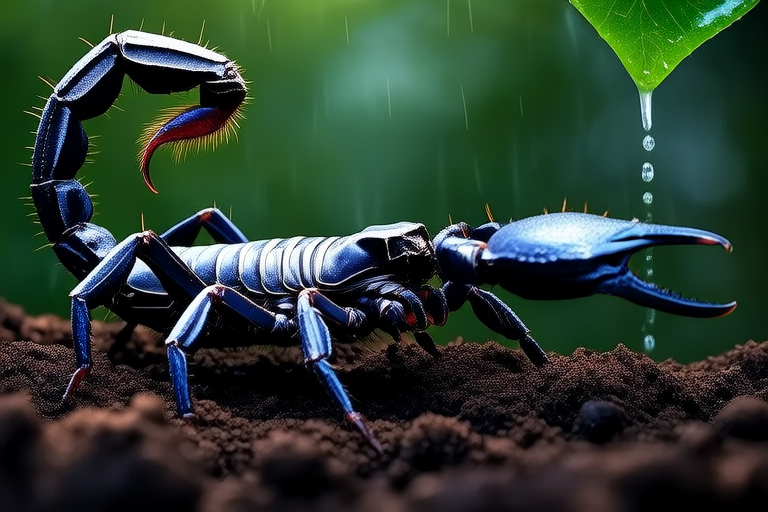
The Heterometrus Spinifer: A Marvel of the Arachnid World
The Heterometrus spinifer, commonly known as the spiny forest scorpion, is one of the most fascinating creatures in the arachnid kingdom. This species, belonging to the family Scorpionidae, is native to Southeast Asia, particularly found in tropical forests and rocky terrains. With its distinct physical attributes and intriguing behaviors, the Heterometrus spinifer has captured the attention of scientists and nature enthusiasts alike. In this article, we will delve into the unique characteristics, habitat, behavior, and myths surrounding this remarkable scorpion.
Physical Attributes
The Heterometrus spinifer is easily recognizable due to its robust body structure and formidable appearance. Adults can grow up to 15 centimeters in length, making them among the largest scorpions in their range. Their bodies are characterized by a dark brown or black coloration, which provides excellent camouflage in their natural habitats. One of the most striking features of this species is the presence of prominent spines along the mesosoma, or middle section of the body, giving rise to its common name.
The pincers, or pedipalps, of the Heterometrus spinifer are large and powerful, adapted for capturing prey and defending against predators. These appendages are equipped with sharp claws that can deliver a strong pinch. The tail, or metasoma, terminates in a venomous stinger, which is used both for defense and hunting. The venom contains neurotoxins that can immobilize small animals and cause intense pain in humans if stung.
Like other scorpions, the Heterometrus spinifer has two eyes on the top of its head and additional pairs of eyes on each side, providing it with excellent vision. However, its primary sensory organs are located in its legs, which are covered in sensitive hairs that detect vibrations and movements in the environment. This allows the scorpion to navigate through its surroundings with precision, even in complete darkness.
Habitat and Behavior
The Heterometrus spinifer thrives in humid, tropical environments such as dense rainforests, bamboo groves, and rocky outcrops. It prefers areas with plenty of hiding spots, like crevices between rocks, hollow logs, and under leaf litter. These environments provide shelter from predators and harsh weather conditions, as well as ample opportunities for hunting.
During the day, these scorpions remain hidden in their burrows or under cover, emerging at night to hunt. They are opportunistic feeders, preying on insects, spiders, and other small invertebrates. Their hunting strategy involves ambushing unsuspecting victims using their powerful pincers and venomous sting. Once caught, the prey is injected with venom to subdue it before being consumed.
Despite their fearsome reputation, Heterometrus spinifer scorpions are generally docile and prefer to avoid confrontation. When threatened, they may adopt a defensive posture, raising their tail and displaying their stinger. If further provoked, they will attempt to sting, but this is usually a last resort. They are solitary creatures, only coming together during the mating season.
Diet and Life Cycle
The diet of the Heterometrus spinifer consists primarily of insects, spiders, and other small invertebrates. They are adept hunters, relying on their keen senses to locate and capture prey. After a successful hunt, the scorpion uses its chelicerae, or mouthparts, to tear apart the prey before consuming it. Their venom plays a crucial role in subduing and digesting their food, breaking down tissues so that nutrients can be absorbed efficiently.
The life cycle of the Heterometrus spinifer begins with mating, which typically occurs during the rainy season when environmental conditions are optimal. Males engage in a complex courtship ritual involving a series of movements and signals to attract females. Once a pair has mated, the female carries fertilized eggs internally until they hatch. She then gives birth to live young, usually numbering between 20 and 40 per brood.
Newborn scorpions, or scorplings, are born alive and ride on their mother’s back for several days before dispersing. During this period, they are vulnerable to predation and rely on their mother’s protection. As they mature, the scorplings undergo a series of molts, shedding their exoskeletons to accommodate growth. It takes approximately three years for a Heterometrus spinifer to reach full maturity, after which they become sexually active and repeat the cycle.
Myths and Misconceptions
Throughout history, scorpions have been the subject of numerous myths and misconceptions, often portrayed as deadly and malevolent creatures. The Heterometrus spinifer is no exception, with many people believing it to be highly dangerous and aggressive. While it is true that the venom of the Heterometrus spinifer can cause severe pain and discomfort in humans, fatalities are extremely rare. Most stings result in localized pain, swelling, and redness, which can be alleviated with proper medical treatment.
Another common myth surrounding this species is that it glows in the dark. While it is true that scorpions possess fluorescent pigments in their exoskeletons, causing them to glow under ultraviolet light, this phenomenon does not occur naturally in the wild. Instead, it is a characteristic that researchers use to study scorpion behavior and ecology.
In some cultures, the Heterometrus spinifer is revered as a symbol of strength and resilience. Its ability to survive in harsh environments and defend itself against threats has made it an inspiration for many. However, it is important to approach these animals with caution and respect, recognizing both their beauty and potential danger.
Significance in Ecosystems
The Heterometrus spinifer plays a vital role in maintaining the balance of its ecosystem. As predators, they help control populations of insects and other small invertebrates, preventing overpopulation and ensuring healthy biodiversity. By doing so, they contribute to the overall health and stability of their environment.
Additionally, the presence of Heterometrus spinifer scorpions can serve as an indicator of the ecological health of an area. Changes in their population or distribution may signal shifts in the broader ecosystem, prompting further investigation and conservation efforts. Understanding the role of these creatures in their habitats is essential for effective wildlife management and preservation.
Conservation Efforts
Despite their importance, the Heterometrus spinifer faces various threats in the wild, including habitat destruction, pollution, and climate change. Deforestation and urbanization have reduced the availability of suitable habitats, forcing these scorpions into smaller, fragmented areas. Pollution, particularly from pesticides and industrial waste, can contaminate their food sources and living spaces, leading to negative impacts on their health and reproduction.
To address these challenges, conservationists are working to protect and restore the natural habitats of the Heterometrus spinifer. This includes establishing protected areas, promoting sustainable land use practices, and conducting research to better understand the species’ needs and behaviors. Public awareness campaigns are also being implemented to educate communities about the importance of preserving these creatures and their environments.
Furthermore, efforts are underway to develop captive breeding programs and reintroduction strategies for endangered populations. These initiatives aim to increase genetic diversity and ensure the long-term survival of the species. Collaboration between scientists, government agencies, and local communities is crucial for the success of these endeavors.
Conclusion
The Heterometrus spinifer is a truly remarkable creature, showcasing the incredible diversity and adaptability of life on Earth. From its distinctive physical attributes to its intricate behaviors and ecological significance, this scorpion offers endless fascination for those who take the time to learn about it. By understanding and appreciating the role of the Heterometrus spinifer in its ecosystem, we can work towards ensuring its continued existence for future generations to marvel at.
