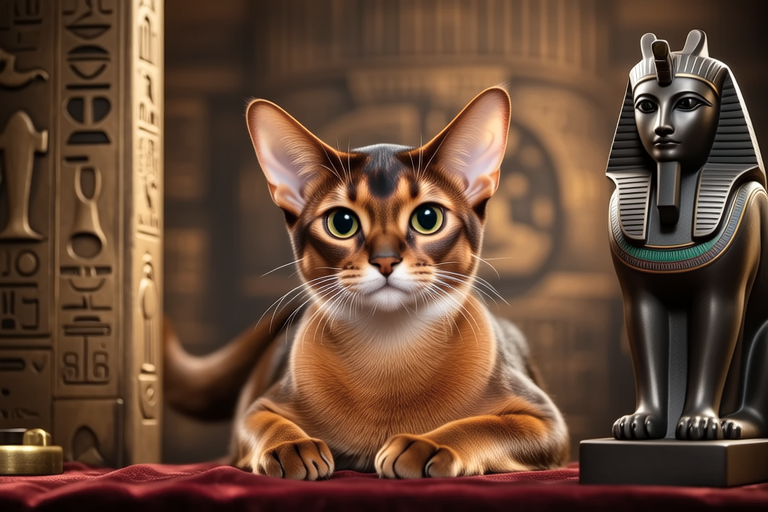
The Origins and Legacy of the Abyssinian Cat
The Abyssinian cat is a breed known for its striking appearance and unique personality. Its roots trace back to ancient times, where it served as a temple guardian in Egypt. This article explores the origins of the Abyssinian cat, from its beginnings in ancient civilizations to its current status as a beloved pet worldwide.
Historical Evidence and Ancient Civilizations
Archaeological findings and historical records suggest that the Abyssinian cat has been associated with ancient civilizations, particularly in Egypt. Mummified cats found in tombs and temples provide evidence of the cat’s presence in Egyptian society. The cat’s agility and keen eyesight made it an ideal companion for hunting vermin, which was crucial in maintaining hygiene in temples and palaces. Cats were often depicted in hieroglyphics, and their importance in Egyptian culture is well-documented. The cat’s role as a symbol of protection and fertility further underscores its significance in ancient societies.
The earliest known reference to the Abyssinian cat can be found in the writings of the Greek historian Herodotus, who visited Egypt around 450 BCE. He described the cat as a sacred animal, revered by the Egyptians. Additionally, the cat’s resemblance to the lion, which was worshipped as a god in Egypt, added to its mystique and importance. The discovery of cat mummies and statuettes in Egyptian tombs also provides evidence of the cat’s role as a religious icon.
Physical Characteristics and Survival
The Abyssinian cat is characterized by its short, ticked coat, large ears, almond-shaped eyes, and slender build. These physical traits have contributed to its survival and popularity. The ticked coat, which features bands of color on each hair shaft, helps the cat blend into its environment, making it an effective hunter. The large ears and keen eyesight allow the cat to detect prey from great distances, while its slender build enables swift movements.
The Abyssinian’s adaptability and resilience have allowed it to thrive in various environments. Its ability to hunt small animals and birds has made it a valuable asset to humans throughout history. The cat’s playful and curious nature also makes it a delightful companion, endearing it to people across different cultures.
Introduction to Europe and North America
The introduction of the Abyssinian cat to Europe and North America is marked by significant figures and events. The breed was first brought to England in the mid-19th century, where it quickly gained popularity among cat fanciers. The founding of the National Cat Club in 1887 further cemented the breed’s place in British society. The club organized cat shows, where Abyssinian cats were often featured, attracting attention from enthusiasts and breeders alike.
The Abyssinian cat was introduced to North America in the early 20th century, following the establishment of the American Cat Association in 1906. The breed’s unique appearance and personality made it a favorite among American cat lovers. The formation of the Cat Fanciers’ Association (CFA) in 1906 played a pivotal role in promoting the breed in the United States. The CFA organized cat shows and recognized the Abyssinian as a distinct breed, contributing to its growing popularity.
Role in Literature, Art, and Popular Culture
The Abyssinian cat has appeared in literature, art, and popular culture throughout history. In ancient Egypt, the cat was often depicted in hieroglyphics and statues, serving as a symbol of protection and fertility. The cat’s association with royalty and nobility further enhanced its status in Egyptian society. In more recent times, the Abyssinian has been featured in children’s books, such as The Secret Garden by Frances Hodgson Burnett, where the cat serves as a loyal companion to the protagonist.
In addition to literature, the Abyssinian has inspired artists and designers. The cat’s sleek, elegant appearance has been captured in paintings, sculptures, and advertisements. The breed’s distinctive coat pattern has been used in fashion design, with clothing and accessories featuring the cat’s iconic ticked fur. The Abyssinian’s enduring appeal in popular culture is evident in its frequent appearances in movies, television shows, and commercials.
Current Status in the Pet World
The Abyssinian cat remains a popular choice for pet owners worldwide. Its playful and curious nature makes it an engaging companion, while its adaptability allows it to thrive in various living situations. The breed’s intelligence and trainability make it easy to handle, and its affectionate demeanor ensures it is always ready for a cuddle. The Abyssinian’s loyalty and devotion to its human family further enhance its appeal as a cherished companion.
Despite its popularity, the Abyssinian cat faces challenges in the pet world. The breed’s high energy level requires regular exercise and mental stimulation, which can be difficult to provide in some households. The Abyssinian’s tendency to develop certain health issues, such as dental problems and kidney disease, necessitates careful monitoring and care. However, responsible breeding practices and advancements in veterinary medicine have helped address these concerns, ensuring the breed’s continued success in the pet world.
In conclusion, the Abyssinian cat’s legacy spans centuries, from its role as a temple guardian in ancient Egypt to its status as a beloved pet today. Its unique appearance, adaptability, and enduring appeal have ensured its place in the hearts of people across different cultures. As a cherished companion, the Abyssinian continues to captivate and inspire, leaving an indelible mark on the pet world.
