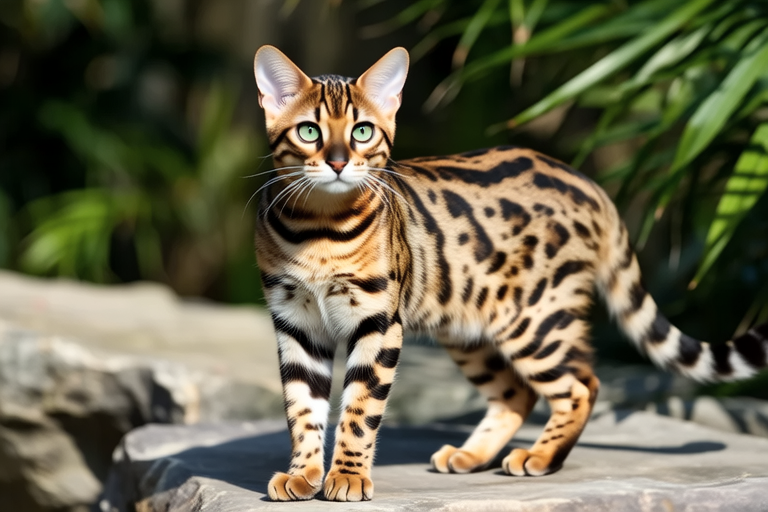
Spots and Stripes: Discover the Unique Personality of Bengal Cats
The Bengal cat, with its striking coat patterns and energetic demeanor, has captured the hearts of cat enthusiasts around the world. This hybrid breed, created through selective breeding between domestic cats and Asian leopard cats, offers a unique blend of wild charm and domestic affection. In this article, we delve into the origins, physical traits, personality, and care requirements of Bengal cats, providing insights for both current and prospective owners.
Origins and Physical Traits
The Bengal cat’s history is as fascinating as its appearance. Developed by Jean Mill in the United States during the 1960s and 1970s, these cats were bred to combine the sleek beauty of wild leopards with the gentle temperament of domestic felines. The result is a breed that looks like a small, tamed version of a leopard, but with the friendly nature of a housecat.
Bengal cats are renowned for their distinctive coat patterns. Their fur can come in two main types: spotted and marbled. Spotted Bengals have rosettes or spots resembling those found on leopards, while marbled Bengals feature swirling patterns reminiscent of marble. Both variations are set against a backdrop of rich colors, often including brown, black, and tan. These coats are not just aesthetically pleasing; they also provide excellent camouflage in natural environments, a trait inherited from their wild ancestors.
In addition to their striking coats, Bengal cats possess muscular bodies, large ears, and almond-shaped eyes. Their medium to large size makes them quite agile, and their powerful legs allow them to leap impressive distances. Despite their robust build, Bengal cats are surprisingly graceful and lithe, capable of moving silently and with great precision.
Energetic and Playful Nature
Bengal cats are known for their high energy levels and boundless enthusiasm. They thrive on activity and require ample space to explore and play. These cats are often compared to dogs due to their interactive and affectionate nature. Owners frequently report that Bengal cats enjoy playing fetch, walking on a leash, and even swimming.
Their playful demeanor extends beyond mere games. Bengal cats are curious creatures, always eager to investigate new objects and environments. They are known to be highly intelligent, capable of solving puzzles and understanding complex commands. This intelligence makes them quick learners, but it also means they need mental stimulation to prevent boredom and destructive behaviors.
One notable anecdote involves a Bengal cat named Max who was trained to open doors. His owner, intrigued by his intelligence, taught him to pull a string attached to a door handle. Max quickly mastered the task and became a regular visitor to the kitchen whenever he heard the sound of food preparation.
Social Behavior and Intelligence
Bengal cats are highly social animals, often forming strong bonds with their human companions. They are affectionate and seek attention, making them ideal pets for families or individuals who enjoy constant interaction. Unlike some other breeds, Bengal cats are generally comfortable with strangers and tend to greet visitors with curiosity rather than wariness.
This social nature extends to interactions with other animals as well. While not all Bengal cats get along with other pets, many adapt well to living with dogs or even other cats, provided they are introduced gradually and given sufficient space.
Studies have shown that Bengal cats excel in problem-solving tasks. One such study involved presenting cats with a puzzle box containing treats. Bengal cats consistently outperformed other breeds in terms of speed and accuracy in opening the box. This intelligence, combined with their sociability, makes Bengal cats particularly enjoyable companions for owners who appreciate interactive and mentally stimulating activities.
Tips for Potential Owners
If you’re considering adopting a Bengal cat, there are several important factors to keep in mind. First and foremost, ensure you have the time and resources to meet their high-energy needs. Providing plenty of toys, climbing structures, and interactive play sessions will help keep your Bengal cat happy and healthy.
Bengal cats are also known for their vocalizations. They are not as talkative as Siamese cats, but they do communicate frequently with chirps, trills, and meows. If you value peace and quiet, a quieter breed might be more suitable.
Grooming is another essential aspect of caring for a Bengal cat. Their short, dense coats require regular brushing to remove loose hairs and prevent matting. Additionally, their active lifestyle means they need a balanced diet rich in nutrients to support their energy levels and muscle development.
Training Bengal cats can be an enjoyable and rewarding experience. Positive reinforcement techniques, such as clicker training and treat rewards, work particularly well with this breed. Teaching your Bengal cat basic commands like “sit” or “come” not only strengthens your bond but also helps manage their playful tendencies.
Anecdotes and Studies
There are numerous stories and studies highlighting the unique personalities of Bengal cats. One such story involves a Bengal cat named Luna who saved her owner from a serious allergic reaction. When her owner collapsed due to anaphylaxis, Luna ran to the neighbor’s house and meowed loudly until someone responded. The neighbor called emergency services, and Luna’s quick thinking likely saved her owner’s life.
Another study conducted at a veterinary clinic revealed that Bengal cats are more prone to certain health issues, such as hip dysplasia and heart problems, compared to other breeds. Regular check-ups and a healthy diet can help mitigate these risks. Prospective owners should research reputable breeders who prioritize genetic health and responsible breeding practices.
Conclusion
Bengal cats are truly one-of-a-kind creatures, offering a captivating blend of wild beauty and domestic affection. Their distinctive coat patterns, energetic nature, and intelligence make them stand out among other cat breeds. For those willing to invest the time and effort, owning a Bengal cat can be a deeply rewarding experience. By understanding their needs and providing appropriate care, you can ensure that your Bengal cat thrives and becomes an integral part of your family.
