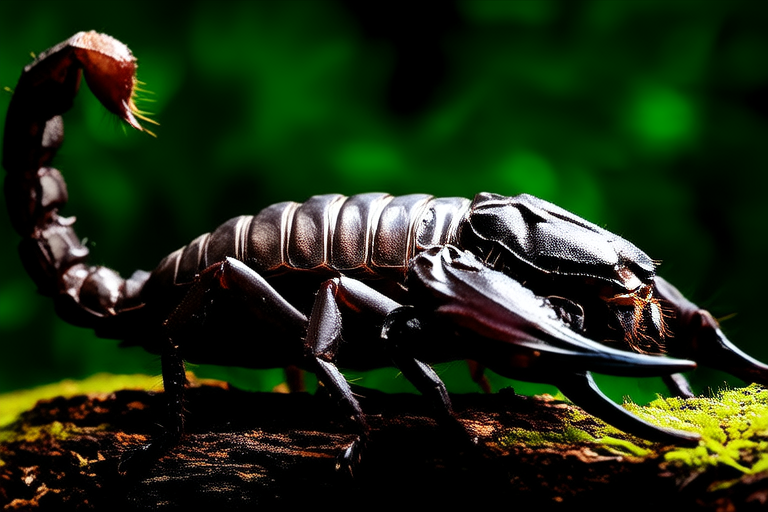
The Asian Forest Scorpion: A Closer Look at Heterometrus Spinifer
The Heterometrus spinifer, commonly known as the Asian forest scorpion, is a fascinating creature that thrives in the lush forests of Southeast Asia. With its distinctive appearance and intriguing behaviors, it captivates the attention of both casual observers and seasoned researchers alike. This article delves into the physical characteristics, nocturnal habits, preferred habitats, and cultural significance of the Asian forest scorpion, while also highlighting the importance of conservation efforts.
Physical Characteristics
The Asian forest scorpion boasts a unique and striking appearance. It typically grows up to 8 centimeters in length, with a flattened body that is well-suited for navigating through dense vegetation. One of its most notable features is its dense hair-like structures, which cover its body and legs. These setae, as they are technically called, serve multiple purposes. They enhance the scorpion’s sensory capabilities, allowing it to detect vibrations and changes in air pressure. Additionally, these structures can be used defensively, helping the scorpion to deter potential predators by making its body appear larger and more formidable.
The coloration of the Asian forest scorpion varies depending on its habitat and age. Juveniles often have a lighter hue, which gradually darkens as they mature. Adults usually exhibit a rich brown or black coloration, providing them with excellent camouflage among the forest floor debris and leaf litter. The pincers, or pedipalps, are robust and powerful, capable of delivering a painful pinch to prey or threats. The tail, or metasoma, ends in a venomous stinger that is primarily used for defense but can also be employed when hunting smaller insects.
Nocturnal Habits and Behaviors
The Asian forest scorpion is predominantly nocturnal, emerging from its daytime hideouts only after dusk. This behavior aligns perfectly with its preference for cooler temperatures and lower humidity, conditions that are more favorable during nighttime hours. As twilight descends, the scorpion becomes active, venturing out to hunt for food and explore its surroundings. Its keen sense of smell and touch, facilitated by the setae on its body, enable it to locate prey even in near-total darkness.
When hunting, the Asian forest scorpion employs a combination of patience and agility. It remains motionless for long periods, waiting for unsuspecting insects to come within striking distance. Once a target is detected, the scorpion uses its powerful pincers to grasp the prey and bring it close enough for the stinger to deliver a dose of venom. This venom contains neurotoxins that paralyze the victim, making it easier for the scorpion to consume. While the venom is potent enough to immobilize small insects, it poses little threat to humans unless provoked.
Defensive mechanisms are crucial for the survival of the Asian forest scorpion. When threatened, it adopts a characteristic posture, curling its tail forward over its back and raising the stinger towards the perceived danger. This intimidating stance is often sufficient to ward off potential predators, such as birds, snakes, and other larger arthropods. If necessary, the scorpion can deliver a painful sting, releasing venom that serves as both a deterrent and a means of escape. However, the scorpion avoids unnecessary aggression, preferring to retreat if possible.
Habitats and Adaptations
The Asian forest scorpion is highly adaptable, thriving in a variety of forested environments across Southeast Asia. It is most commonly found in tropical and subtropical regions, where it occupies the forest floor, seeking shelter under rocks, logs, and leaf litter. These areas provide ample hiding spots and protection from both extreme weather conditions and predators. The scorpion’s flattened body allows it to squeeze into tight spaces, further enhancing its ability to find refuge.
In addition to its physical adaptations, the Asian forest scorpion has developed behavioral strategies to cope with environmental challenges. During dry seasons, it may enter a state of dormancy, reducing its metabolic rate and conserving energy until more favorable conditions return. This ability to withstand periods of scarcity is crucial for survival in regions where rainfall can be unpredictable. Moreover, the scorpion’s nocturnal lifestyle minimizes exposure to intense sunlight, which can dehydrate its delicate exoskeleton.
Cultural Significance and Myths
The Asian forest scorpion holds a special place in the folklore and traditions of many Southeast Asian cultures. In some communities, it is revered as a symbol of strength and resilience, reflecting its ability to thrive in challenging environments. Legends often depict the scorpion as a guardian spirit, protecting the forest and its inhabitants from harm. These myths highlight the deep connection between people and nature, emphasizing the importance of respecting and preserving the natural world.
However, not all stories about the Asian forest scorpion are positive. Some cultures view it with fear and suspicion, attributing supernatural powers to the creature. These beliefs can lead to misunderstandings and mistreatment of the scorpion, further complicating conservation efforts. By fostering a better understanding of the scorpion’s true nature and ecological role, we can work towards dispelling harmful myths and promoting coexistence.
Conservation Efforts and Biodiversity
As human populations continue to expand and encroach upon natural habitats, the survival of the Asian forest scorpion is increasingly threatened. Deforestation, agricultural expansion, and climate change pose significant risks to the species, potentially leading to population declines and loss of biodiversity. Conservationists and environmental organizations are working diligently to protect these vital ecosystems, recognizing the critical role that the Asian forest scorpion plays within its ecosystem.
Understanding the Asian forest scorpion and its behaviors is essential for effective conservation. By studying its habitat preferences, dietary habits, and interactions with other species, researchers can develop targeted strategies to preserve the scorpion and the broader forest community. Public education initiatives play a crucial role in raising awareness about the importance of biodiversity and encouraging responsible stewardship of the environment.
In conclusion, the Asian forest scorpion, or Heterometrus spinifer, is a remarkable creature with a wealth of interesting traits and behaviors. From its dense hair-like structures to its nocturnal hunting techniques, this scorpion showcases the incredible diversity of life on our planet. By appreciating and protecting this species, we contribute to the preservation of healthy ecosystems and ensure the continued existence of countless other organisms that depend on these environments. Let us embrace our responsibility as stewards of the earth and work together to safeguard the future of the Asian forest scorpion and the rich tapestry of life it represents.
