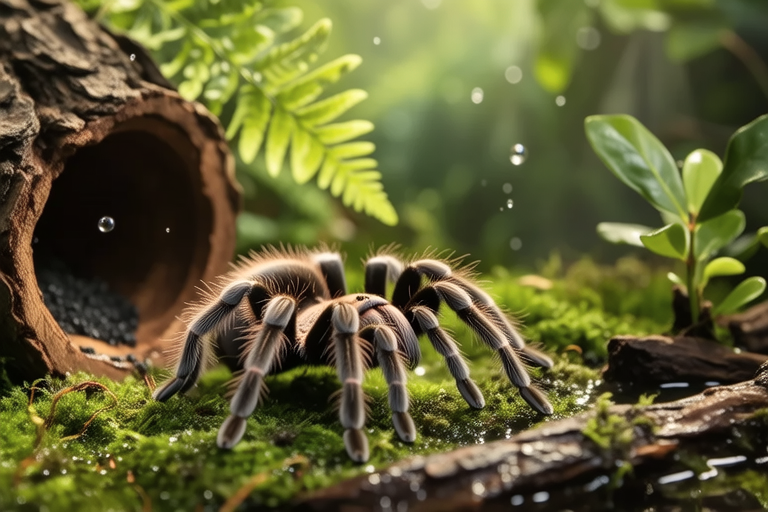
How to Create the Perfect Habitat for Your Tarantula
Tarantulas make fascinating pets, but creating the perfect habitat for them requires careful planning and attention to detail. This guide will walk you through the essential elements of tarantula habitat setup, including enclosure size, substrate type and depth, temperature and humidity requirements, ventilation needs, hiding spots, lighting considerations, feeding areas, cleaning and maintenance tips, safety measures to prevent escape or injury, and advice on gradual acclimation to new environments. Specific recommendations for different tarantula species based on their environmental preferences are also provided.
Research and Preparation for Responsible Ownership
Before purchasing a tarantula, it is crucial to research the species you’re interested in. Different species have distinct environmental preferences that must be met to ensure their health and well-being. Understanding your tarantula’s natural habitat can help you create an environment that mimics its native conditions. For instance, terrestrial tarantulas like the Mexican redknee (Brachypelma smithi) thrive in dry, arid environments, while arboreal species such as the pinktoe tarantula (Avicularia avicularia) prefer humid, tropical settings. Additionally, some species, like the Chilean rose hair (Grammostola rosea), are more adaptable and can tolerate a wider range of conditions.
Appropriate Enclosure Size
The enclosure size should be proportional to the tarantula’s size. A general rule of thumb is to provide at least three times the leg span in height and two to three times the leg span in width. For example, a tarantula with a 4-inch leg span would require an enclosure that is at least 12 inches tall and 8 to 12 inches wide. Larger enclosures allow for more space to explore and establish territories, which is especially important for aggressive species like the Brazilian giant whiteknee (Acanthoscurria geniculata).
Substrate Type and Depth
The substrate, or bedding material, should mimic the tarantula’s natural environment. Terrestrial species typically require a loose, sandy substrate about 3 to 4 inches deep, allowing for burrowing. Examples include coconut fiber, cypress mulch, or a mixture of sand and soil. Arboreal species, on the other hand, prefer a substrate that retains moisture and provides stability for climbing structures. Sphagnum moss or a mix of peat moss and coconut fiber works well for these species.
Temperature and Humidity Requirements
Maintaining the correct temperature and humidity levels is critical for your tarantula’s health. Most terrestrial species thrive in temperatures between 75°F and 85°F (24°C to 29°C) with humidity levels around 60%. Arboreal species generally prefer higher humidity levels, ranging from 70% to 80%, with temperatures between 78°F and 82°F (25°C to 28°C). To achieve the desired humidity levels, mist the substrate regularly or use a humidifier. Thermometers and hygrometers are essential tools for monitoring these conditions accurately.
Ventilation Needs
Proper ventilation is necessary to prevent stagnant air and promote healthy respiration. Ensure there are adequate air holes or mesh screens on the enclosure lid. However, avoid drafts that could cause temperature fluctuations. Some species, like the Guyana black widow (Aphonopelma seemanni), are more sensitive to changes in temperature and humidity, so extra care should be taken when adjusting ventilation.
Hiding Spots
Tarantulas are solitary creatures that need a secure place to hide and feel safe. Provide several hiding spots within the enclosure, such as cork bark, hollow logs, or artificial caves. The hiding spots should be large enough for the tarantula to fit comfortably inside. Species like the Mexican redknee tarantula are known to be shy and may spend most of their time in hiding, so offering multiple options is beneficial.
Lighting Considerations
Most tarantulas are nocturnal and do not require UV lighting. However, providing a gentle, low-wattage heat lamp can help maintain the appropriate temperature. Avoid placing the light directly above the enclosure to prevent overheating. Some species, like the Costa Rican zebra (Aphonopelma seemanni), may benefit from a small nightlight placed outside the enclosure to provide a dim glow during the evening hours. Ensure that any lighting used does not exceed the recommended wattage for the enclosure size.
Feeding Areas
Designate a specific area within the enclosure for feeding to prevent accidental ingestion of substrate or contamination of the environment. Place food items on a small dish or directly on the substrate. Remove uneaten prey after 24 hours to prevent mold growth or pest infestations. Some species, like the Chilean rose hair tarantula, are more likely to eat smaller prey items like crickets or mealworms, while others, like the Brazilian giant whiteknee, may consume larger prey such as mice or lizards.
Cleaning and Maintenance Tips
Regular cleaning is essential to maintain a healthy environment for your tarantula. Spot clean the enclosure daily by removing waste and uneaten prey. Perform a thorough cleaning every two to four weeks, depending on the enclosure size and the number of tarantulas housed. During a deep clean, remove all substrate and replace it with fresh material. Clean the enclosure walls and decorations with a mild soap solution, ensuring they are thoroughly rinsed and dried before reassembling the habitat.
Safety Measures to Prevent Escape or Injury
To prevent escapes, secure the enclosure with a tight-fitting lid that has ventilation holes. Use a lockable screen cover or apply silicone sealant around the edges of the lid. Regularly check for gaps or weak points where the tarantula could potentially escape. Injuries can occur if the enclosure is overcrowded or if incompatible species are housed together. Always handle your tarantula carefully, using tongs or a net to minimize stress and the risk of injury.
Advice on Gradual Acclimation to New Environments
When introducing your tarantula to a new enclosure, allow it to adjust gradually to the new environment. Place the enclosure in a quiet, stable location away from direct sunlight and drafts. Gradually introduce the tarantula to the new enclosure over a period of several days, allowing it to explore and become comfortable. Monitor the tarantula closely during this period to ensure it is adapting well to its new home.
Species-Specific Recommendations
- Mexican Redknee Tarantula (Brachypelma smithi): This terrestrial species prefers a dry, arid environment with temperatures between 75°F and 85°F (24°C to 29°C) and humidity levels around 60%. Provide a loose, sandy substrate about 3 to 4 inches deep and several hiding spots.
- Pinktoe Tarantula (Avicularia avicularia): An arboreal species that thrives in humid, tropical settings with temperatures between 78°F and 82°F (25°C to 28°C) and humidity levels between 70% and 80%. Offer a substrate that retains moisture and climbing structures such as cork bark or branches.
- Chilean Rose Hair Tarantula (Grammostola rosea): Known for its adaptability, this species can tolerate a wider range of conditions. Provide a loose, sandy substrate about 3 to 4 inches deep and temperatures between 75°F and 85°F (24°C to 29°C) with humidity levels around 60%. Offer several hiding spots and a designated feeding area.
- Brazilian Giant Whiteknee Tarantula (Acanthoscurria geniculata): This aggressive terrestrial species requires a spacious enclosure with temperatures between 75°F and 85°F (24°C to 29°C) and humidity levels around 60%. Provide a loose, sandy substrate about 3 to 4 inches deep and several hiding spots.
- Costa Rican Zebra Tarantula (Aphonopelma seemanni): A terrestrial species that prefers a dry, arid environment with temperatures between 75°F and 85°F (24°C to 29°C) and humidity levels around 60%. Provide a loose, sandy substrate about 3 to 4 inches deep and several hiding spots.
In conclusion, creating the perfect habitat for your tarantula requires careful consideration of enclosure size, substrate type and depth, temperature and humidity requirements, ventilation needs, hiding spots, lighting considerations, feeding areas, cleaning and maintenance tips, safety measures to prevent escape or injury, and advice on gradual acclimation to new environments. By following these guidelines and conducting thorough research, you can ensure a healthy and happy life for your pet tarantula.
