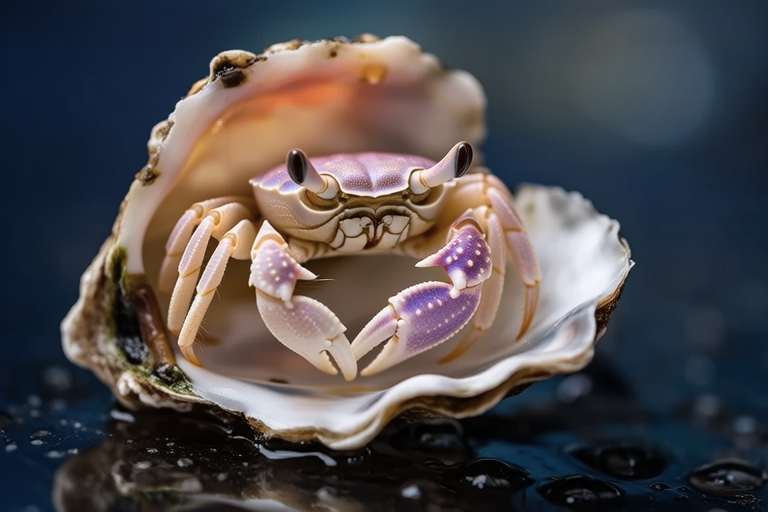
Pea Crabs: The Unsung Heroes of the Oyster World
In the vast and intricate world of marine ecosystems, there exists a remarkable partnership that has gone largely unnoticed by many. This partnership involves the pea crab (Pinnotheres ostreum) and its host, the oyster. These tiny crustaceans, no larger than a thumbnail, have evolved a unique lifestyle that is both fascinating and crucial for the survival of their hosts. This article delves into the symbiotic relationship between pea crabs and oysters, highlighting the adaptations of pea crabs, their role in maintaining oyster health, and the benefits they provide to their hosts.
The Symbiotic Relationship
The relationship between pea crabs and oysters is a classic example of commensalism, where one species benefits while the other is neither helped nor harmed. Pea crabs live inside the mantle cavity of oysters, which is the space between the oyster’s two shells. They do not consume the oyster’s tissues but rather feed on plankton and detritus that enter the oyster’s gills. In return, the oyster provides a safe and protected environment for the pea crabs to grow and reproduce.
This mutualistic relationship is beneficial for both parties. For the pea crabs, the oyster shell serves as a fortress against predators, allowing them to thrive in relative safety. For the oysters, the presence of pea crabs can enhance water circulation within the mantle cavity, potentially improving the efficiency of their filter-feeding mechanism. Additionally, pea crabs may help remove parasites or other harmful organisms from the oyster’s surface, contributing to the overall health of their host.
Unique Adaptations of Pea Crabs
To thrive inside the oyster, pea crabs have developed several remarkable adaptations. One of the most striking features of pea crabs is their flattened bodies, which allow them to fit comfortably within the narrow spaces of the oyster’s mantle cavity. Their elongated legs are also adapted for crawling through the gill filaments, where they can find food particles and avoid being crushed by the closing shells of their host.
Another adaptation is their ability to shed their exoskeletons without leaving the oyster. Unlike other crabs, pea crabs undergo a series of partial molts throughout their lives, gradually growing larger while remaining inside their host. This process minimizes the risk of injury or predation during the vulnerable period when they are soft-bodied and defenseless.
Pea crabs also possess specialized appendages called maxillipeds, which they use to manipulate food particles and transfer them to their mouthparts. These structures are particularly well-suited for filtering the small particles of organic matter that enter the oyster’s feeding current.
The Life Cycle of Pea Crabs
The life cycle of pea crabs is closely tied to that of their oyster hosts. After mating, female pea crabs release fertilized eggs into the water column, where they develop into free-swimming larvae. These larvae drift with ocean currents until they encounter an oyster larva, at which point they attach themselves to the developing shell.
Once inside the oyster, the larvae continue to develop into juvenile crabs. As they grow, they molt several times, gradually increasing in size and complexity. Eventually, they reach adulthood and begin reproducing themselves. The entire life cycle of pea crabs can take anywhere from one to three years, depending on environmental conditions such as temperature and food availability.
Interestingly, the sex ratio of pea crabs within a single oyster is often skewed towards females. This phenomenon is thought to be an evolutionary strategy that maximizes reproductive success, as female pea crabs produce more offspring than males. In some cases, multiple generations of pea crabs may coexist within a single oyster, creating a complex and dynamic community within the confines of the shell.
Impact on Oyster Reproduction
The presence of pea crabs has been shown to influence oyster reproduction in several ways. One study found that oysters harboring pea crabs had higher rates of successful spawning compared to those without the crabs. This effect is believed to be due to the improved water circulation within the mantle cavity, which enhances the delivery of oxygen and nutrients to the oyster’s reproductive organs.
Additionally, pea crabs may play a role in protecting oysters from parasitic infections that could otherwise interfere with reproduction. By removing or preventing the attachment of parasites, pea crabs help maintain the health and vitality of their hosts, ensuring that they are better able to produce viable offspring.
Threats to Pea Crabs and Their Ecosystem
Despite their importance to oyster health, pea crabs face several threats in their ecosystem. One of the primary challenges is habitat degradation caused by human activities such as dredging, pollution, and overfishing. These factors can disrupt the delicate balance of marine environments, reducing the availability of suitable oyster habitats for pea crabs to colonize.
Climate change also poses a significant threat to pea crabs and their hosts. Rising sea temperatures and changes in ocean chemistry can affect the growth and survival of both oysters and pea crabs, potentially leading to declines in population sizes. Additionally, increased levels of carbon dioxide in the atmosphere can lead to ocean acidification, which may weaken the shells of oysters and make it more difficult for pea crabs to establish themselves within their hosts.
Predation is another factor that can impact pea crab populations. While the oyster shell provides protection against many predators, some species have evolved specialized techniques for extracting pea crabs from their hosts. For example, certain fish and birds are known to crack open oyster shells to access the hidden crabs inside. As a result, pea crabs must constantly adapt their behavior to avoid detection and capture.
Conclusion
Pea crabs are truly unsung heroes of the oyster world, playing a vital role in maintaining the health and productivity of these important marine organisms. Through their unique adaptations and symbiotic relationship with oysters, pea crabs contribute to the overall functioning of coastal ecosystems. Understanding the complexities of this relationship is essential for effective conservation efforts aimed at preserving both pea crabs and their hosts in the face of ongoing environmental challenges.
As we continue to explore the wonders of marine biology, it is clear that there is still much to learn about the intricate connections between species. By appreciating the value of these small yet significant creatures, we can work towards a future where both pea crabs and oysters thrive in harmony with their surroundings.
