Training Your Golden Retriever Puppy: A Comprehensive Guide
Welcome to the wonderful world of golden retriever puppies! These friendly, intelligent dogs make fantastic companions, but they do require proper training to become well-behaved members of your family. This guide will walk you through the process of training your golden retriever puppy, covering essential topics like housebreaking, basic obedience commands, socialization, and managing common puppy behaviors.
Establishing a Routine
Creating a consistent daily routine is crucial for your puppy’s development. A structured schedule helps them understand what is expected of them and provides stability. Start by setting regular feeding times, which can be two or three times a day depending on their age. Puppies need to eat frequently to support their rapid growth.
Alongside meals, establish a regular potty break schedule. Take your puppy outside every hour initially, then gradually increase the intervals as they learn to control their bladder. Always praise them when they go potty outside, reinforcing good behavior.
Schedule short training sessions throughout the day. Begin with five-minute sessions and extend them as your puppy’s attention span grows. Use these sessions to teach basic commands and reinforce good behavior.
Housebreaking Techniques
Housebreaking is one of the first challenges new puppy owners face. The key to success lies in consistency, patience, and positive reinforcement.
Selecting a Potty Spot
Choose a specific spot outside where your puppy will relieve themselves. Consistency is vital; always take them to the same area. Once you’ve selected a spot, use a verbal cue like “go potty” as they start to eliminate. This way, they’ll associate the command with the action.
Timing and Patience
Take your puppy out frequently, especially after meals, naps, playtime, and whenever they show signs of needing to go, such as sniffing around or circling. Keep the sessions short and positive, praising them when they go in the right place.
Accidents Happen
If an accident occurs inside the house, calmly clean it up without scolding your puppy. Scolding may cause fear and confusion, hindering the learning process. Instead, focus on preventing future accidents by increasing the frequency of outdoor trips.
Basic Obedience Commands
Teaching basic commands early on sets a strong foundation for your puppy’s behavior. Positive reinforcement is the most effective method for teaching commands.
Sit
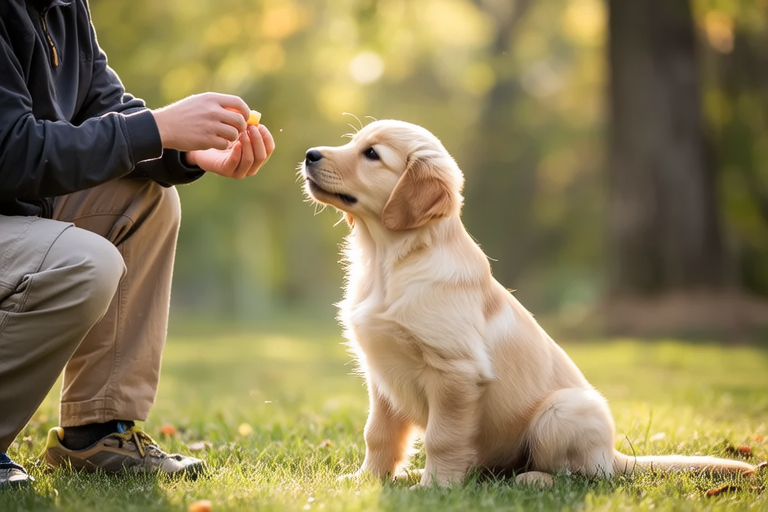
To teach your puppy to sit, hold a treat above their nose and slowly move it back over their head. As they look up, their bottom should naturally lower. Say “sit” as they do so, and give them the treat once they’re fully seated. Repeat this several times during each training session.
Stay
The stay command requires more practice. Start by asking your puppy to sit or lie down. Hold your hand out in front of them, palm facing them, and say “stay.” Take a few steps back, then return immediately and reward them if they haven’t moved. Gradually increase the distance and duration of your absence.
Coming When Called
This command is crucial for safety. To teach your puppy to come when called, start in a quiet environment with minimal distractions. Call their name followed by “come,” and reward them with treats and affection when they reach you. Practice this command in various locations and with increasing levels of distraction.
Socialization Methods
Socializing your golden retriever puppy is essential for developing a well-rounded, confident dog. Expose them to different environments, people, and other animals in a controlled and positive manner.
Varying Environments
Take your puppy to parks, pet stores, and other public places. Let them explore at their own pace, allowing them to experience new sights, sounds, and smells. Always keep them on a leash and ensure they feel safe and comfortable.
Meeting New People
Invite friends and family over to meet your puppy. Encourage gentle interactions, rewarding your puppy for calm and friendly behavior. Teach children how to approach and handle the puppy gently.
Interacting with Other Animals
Introduce your puppy to other well-socialized dogs under supervision. Arrange playdates or visit dog parks where they can interact safely. This helps prevent aggression and fosters positive relationships with other animals.
Managing Common Puppy Behaviors
Puppies often exhibit behaviors that can be challenging for new owners. Understanding these behaviors and addressing them appropriately will help you raise a well-behaved adult dog.
Chewing
Puppies chew to explore their environment and satisfy their natural urge to gnaw. Provide appropriate chew toys and redirect their chewing to these items when necessary. If your puppy starts chewing on something inappropriate, gently remove the item and offer a suitable alternative.
Barking
Barking is a natural form of communication for dogs. However, excessive barking can become a nuisance. Identify the triggers for your puppy’s barking and address them accordingly. For example, if your puppy barks excessively when left alone, consider crate training or providing them with a comforting toy.
Destructive Behavior
Destructive behavior can stem from boredom, anxiety, or lack of exercise. Ensure your puppy gets plenty of physical activity and mental stimulation. Rotate toys to keep them interesting and engaging. If destructive behavior persists, consult a professional trainer or veterinarian.
Positive Reinforcement Training
Positive reinforcement is the cornerstone of successful dog training. It involves rewarding desired behaviors with treats, praise, or toys, encouraging your puppy to repeat those actions. Avoid punishment-based training methods, as they can lead to fear, aggression, and a breakdown in trust.
When using treats as rewards, choose small, easily digestible ones to avoid digestive upset. Pair treats with verbal praise and affection to strengthen the bond between you and your puppy.
Tips for New Owners
Raising a golden retriever puppy can be both rewarding and challenging. Here are some additional tips to help you along the way:
- Be patient: Remember that puppies are learning and growing, and they will make mistakes. Stay calm and consistent in your approach.
- Seek professional guidance: If you encounter difficulties, don’t hesitate to seek help from a professional trainer or behaviorist.
- Join a training class: Group classes provide valuable socialization opportunities and allow you to learn from experienced trainers.
- Stay active: Golden retrievers are energetic dogs that require regular exercise to stay healthy and happy. Engage in activities like walking, running, and playing fetch.
Conclusion
Training your golden retriever puppy is a rewarding journey that strengthens the bond between you and your furry friend. By following the guidelines outlined in this article, you’ll set your puppy on the path to becoming a well-mannered, confident adult dog. Remember to remain patient, consistent, and positive throughout the process. With time and effort, you’ll have a loyal companion who brings joy to your life for years to come.
