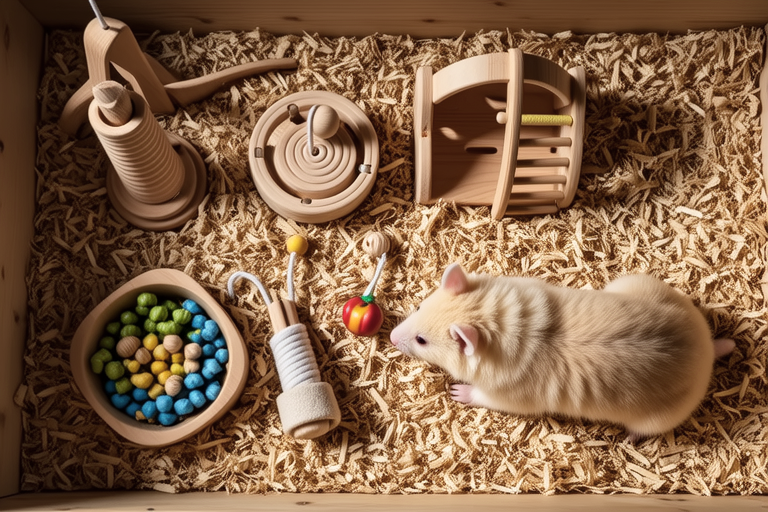
5 Ingenious DIY Toys to Keep Your Hamster Entertained
Welcome to the world of hamster owners who are passionate about their pets’ happiness and well-being. Mental stimulation is just as crucial for hamsters as physical exercise. A mentally stimulated hamster is less likely to display destructive behaviors and more likely to maintain a healthy weight and strong muscles. In this article, we will explore five ingenious DIY toys that will keep your hamster entertained while providing them with necessary physical and mental stimulation.
1. The Tunneling Funhouse
The Tunneling Funhouse is a fantastic way to create an adventurous playground for your hamster. This DIY project involves constructing a series of tunnels that can be connected and reconfigured to offer endless fun for your pet.
Materials Needed:
- Cardboard tubes (from paper towel rolls or toilet paper rolls)
- Cardboard boxes
- Scissors
- Duct tape
- Pencil or marker
Step-by-Step Instructions:
- Prepare the Cardboard Tubes: Cut the cardboard tubes to varying lengths. Ensure they are smooth and free of any sharp edges.
- Create Entry Points: Using scissors, cut out entry points on the sides of the cardboard boxes. These will serve as access points for your hamster to enter and exit the tunnels.
- Assemble the Tunnels: Arrange the cardboard tubes within the boxes, connecting them through the entry points you’ve created. Secure the connections with duct tape.
- Add Decorations: To make the funhouse even more enticing, consider adding small paper decorations or stickers to the tunnels.
The Tunneling Funhouse encourages your hamster to explore and navigate through different pathways, stimulating both their mind and body. It also helps them practice climbing and crawling skills, which are essential for their overall health.
2. The Obstacle Course
Hamsters love to run, but sometimes they need a bit of challenge to stay engaged. The Obstacle Course is perfect for providing just that. This DIY toy involves creating a series of obstacles that your hamster must overcome to reach their destination.
Materials Needed:
- Cardboard tubes
- Small wooden blocks
- Plastic cups
- Rubber bands
- String or yarn
Step-by-Step Instructions:
- Build the Base: Lay down a flat surface, such as a large piece of cardboard or a tray, to act as the base for your obstacle course.
- Construct the Obstacles: Arrange the cardboard tubes, wooden blocks, and plastic cups to create various obstacles. For example, place a cardboard tube horizontally and use rubber bands to secure it to the base. Place wooden blocks at different heights for your hamster to climb over.
- Add String Challenges: Attach pieces of string or yarn between the obstacles to encourage your hamster to jump or crawl under them.
The Obstacle Course challenges your hamster’s problem-solving skills and provides them with a sense of accomplishment when they successfully navigate through the course. It also keeps them physically active, helping to prevent obesity and muscle weakness.
3. The Rotating Wheel
A hamster wheel is a staple in many hamster habitats, but why not add a twist? The Rotating Wheel is a DIY toy that takes the traditional hamster wheel to the next level by incorporating movement and unpredictability.
Materials Needed:
- Hamster wheel
- Battery-powered motor
- Wire
- Switch
- Glue gun
Step-by-Step Instructions:
- Prepare the Motor: Disassemble the battery-powered motor and remove the gears.
- Attach the Motor: Glue the motor to the base of the hamster wheel, ensuring it is securely attached.
- Connect the Gears: Use wire to connect the gears of the motor to the gears of the hamster wheel. Make sure the connection is tight so that the wheel rotates when the motor is activated.
- Install the Switch: Attach a switch to the motor so that you can control when the wheel starts and stops rotating.
The Rotating Wheel offers a unique form of exercise for your hamster, as they have to adapt to the unpredictable motion of the wheel. This toy provides mental stimulation by challenging your hamster to balance and coordinate their movements.
4. The Treasure Hunt
The Treasure Hunt is a playful activity that combines food and exploration, making it a favorite among hamsters. This DIY toy encourages your hamster to search for hidden treats, stimulating their natural hunting instincts.
Materials Needed:
- Small containers (like film canisters or pill bottles)
- Hamster treats
- Tape
- Markers or stickers
Step-by-Step Instructions:
- Prepare the Containers: Fill the small containers with hamster treats. Seal the containers tightly to prevent spills.
- Hide the Containers: Conceal the filled containers around your hamster’s habitat. You can hide them under bedding, behind objects, or inside tunnels.
- Add Clues: If you want to make the treasure hunt even more exciting, consider adding visual clues or scent markers to guide your hamster towards the hidden treats.
The Treasure Hunt engages your hamster’s sense of smell and sight, as they search for hidden treats. It also promotes mental stimulation by encouraging them to explore their environment and solve puzzles.
5. The Climbing Frame
The Climbing Frame is a versatile DIY toy that allows your hamster to climb, hang, and explore different levels within their habitat. This toy is particularly beneficial for hamsters that enjoy vertical exploration.
Materials Needed:
- Wooden dowels
- Cork boards
- String or yarn
- Hot glue gun
- Paint (optional)
Step-by-Step Instructions:
- Build the Base: Start by gluing the cork boards together to form a stable base for the climbing frame.
- Attach the Dowels: Use hot glue to attach the wooden dowels to the cork boards, creating different levels for your hamster to climb.
- Add Strings: Tie strings or yarn between the dowels to create hanging areas where your hamster can rest or play.
- Personalize: If desired, paint the climbing frame to match your hamster’s habitat or to make it more visually appealing.
The Climbing Frame provides ample opportunities for your hamster to exercise their climbing abilities and engage in physical activities. It also stimulates their minds by offering new and interesting environments to explore.
Tips for Safety Checks and Regular Toy Rotation
To ensure the safety and continued engagement of your hamster, it’s important to perform regular safety checks on the toys. Inspect the toys for any signs of wear and tear, such as loose parts or frayed strings. Replace any damaged toys immediately to prevent potential injuries.
Additionally, regularly rotate the toys in your hamster’s habitat. Introducing new toys every few weeks helps to keep your hamster’s interest piqued and prevents boredom. Rotate the toys by removing some and replacing them with others from your collection. This keeps the environment fresh and exciting for your hamster.
In conclusion, these five DIY toys offer a range of benefits for your hamster’s well-being. From mental stimulation to physical exercise, each toy provides unique advantages that contribute to your hamster’s overall health and happiness. By investing time and creativity into crafting these toys, you’ll be rewarded with a more active, curious, and content pet.
