The Turkish Angora’s Legacy: History, Beauty, and Modern Charm
The Turkish Angora, a breed of cat renowned for its striking appearance and elegant demeanor, has captivated hearts for centuries. Originating from the Anatolian region of what is now Turkey, this breed boasts a rich history intertwined with royalty and nobility. The Turkish Angora’s legacy is one of grace, intelligence, and adaptability, making it a cherished companion in both ancient palaces and modern homes.
Origins and Historical Significance
The Turkish Angora traces its roots back to the ancient city of Ankara, formerly known as Angora. This breed has been documented since the 16th century, where it was highly prized by Ottoman sultans and European royalty alike. The cats were often gifted as diplomatic presents, enhancing their reputation as symbols of luxury and refinement. In fact, the Turkish Angora was so esteemed that it was featured in many paintings and writings of the era, further cementing its place in history.
The breed’s association with royalty did not diminish over time; instead, it became more entrenched. During the reign of Sultan Suleiman the Magnificent, the Turkish Angora was considered a status symbol among the elite. The sultan himself was known to keep several Angoras at his palace, adding to the breed’s mystique. These cats were not merely pets but also companions, often accompanying their owners on long journeys and diplomatic missions.
Distinctive Physical Traits
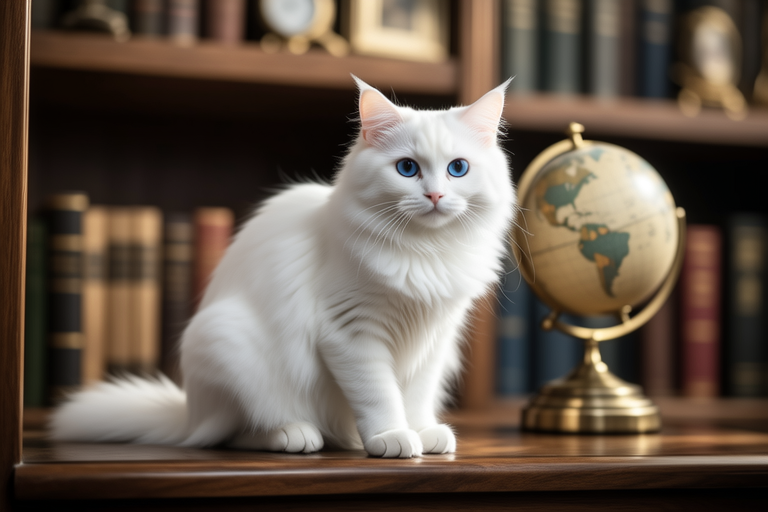
One of the most striking features of the Turkish Angora is its coat, which can come in a variety of colors and patterns. The breed is famous for its semi-longhair coat, which is silky and fine-textured, giving it a luxurious appearance. The coat can be tipped with white, black, red, or any combination thereof, creating a stunning visual effect. The most common color is white, and these cats are often referred to as “white Turkish Angoras.”
Equally remarkable are the Turkish Angora’s eyes, which can range from vivid blue to green, gold, or even a striking heterochromia (two different colored eyes). This unique feature adds to the breed’s allure, making each individual cat a work of art. Their almond-shaped eyes are framed by long, tufted ears, giving them a regal and somewhat mystical look.
Physically, the Turkish Angora is a medium-sized cat with a slender, graceful build. They have a well-proportioned head, a long neck, and a plumed tail that adds to their elegance. Their legs are long and slender, contributing to their agility and athleticism. Despite their delicate appearance, they are surprisingly sturdy and capable of great leaps and bounds.
Evolution Over Time
Over the years, the Turkish Angora has adapted to various environments, maintaining its unique charm while evolving to suit modern living. Initially, these cats were bred in controlled environments, such as royal harems, where they were carefully selected for their appearance and temperament. As the breed spread beyond Turkey, it began to adapt to new surroundings, becoming more resilient and adaptable.
Today, Turkish Angoras are found in homes across the globe, thriving in diverse settings. Their intelligence and playful nature make them excellent companions, capable of forming strong bonds with their human families. Studies have shown that Turkish Angoras are particularly adept at problem-solving, often outperforming other breeds in cognitive tasks. This intelligence is reflected in their curiosity and willingness to explore their environment, making them endlessly entertaining for their owners.
Anecdotes abound of Turkish Angoras’ playful antics. One notable story involves a Turkish Angora named Luna, who was known for her love of fetch. Her owner, a single mother, often found herself playing fetch with Luna during her free time. Luna’s enthusiasm was infectious, bringing joy and laughter to the household. Another tale recounts a Turkish Angora named Max, who learned to open doors by manipulating the handles, much to the delight and occasional frustration of his human family.
Intelligence, Playfulness, and Adaptability
The Turkish Angora’s intelligence extends beyond mere problem-solving; it also manifests in their social behavior. These cats are highly interactive and enjoy engaging with their human companions. They are known for their affectionate natures, often seeking out attention and affection from their owners. Their playful demeanor makes them ideal for households with children, as they are patient and gentle.
Adaptability is another hallmark of the Turkish Angora. Whether living in an apartment or a large house, they adjust easily to their surroundings. They are equally comfortable in urban environments as they are in rural settings, provided they have adequate space to move around and toys to stimulate their minds. Their adaptability is further enhanced by their ability to coexist harmoniously with other pets, making them versatile additions to multi-pet households.
Enduring Appeal
The enduring appeal of the Turkish Angora lies in its unique blend of beauty, intelligence, and charm. As companions, they offer a level of companionship that is both enriching and rewarding. Their elegant appearance and graceful movements make them a joy to behold, while their playful and intelligent nature keeps life interesting. For those who appreciate the finer things in life, the Turkish Angora is more than just a pet; it is a symbol of elegance and sophistication.
In conclusion, the Turkish Angora’s legacy is one of timeless beauty and enduring charm. From its origins in the palaces of Ottoman sultans to its current status as a beloved companion in homes around the world, this breed continues to captivate and enchant. Its distinctive physical traits, coupled with its intelligence and adaptability, make it a cherished member of the feline community. Whether you are a seasoned cat enthusiast or simply appreciate the finer things in life, the Turkish Angora offers a unique and rewarding experience that is sure to leave a lasting impression.
